


How to Avoid Romance Scams in NZ: A Patient Guide to Online Safety

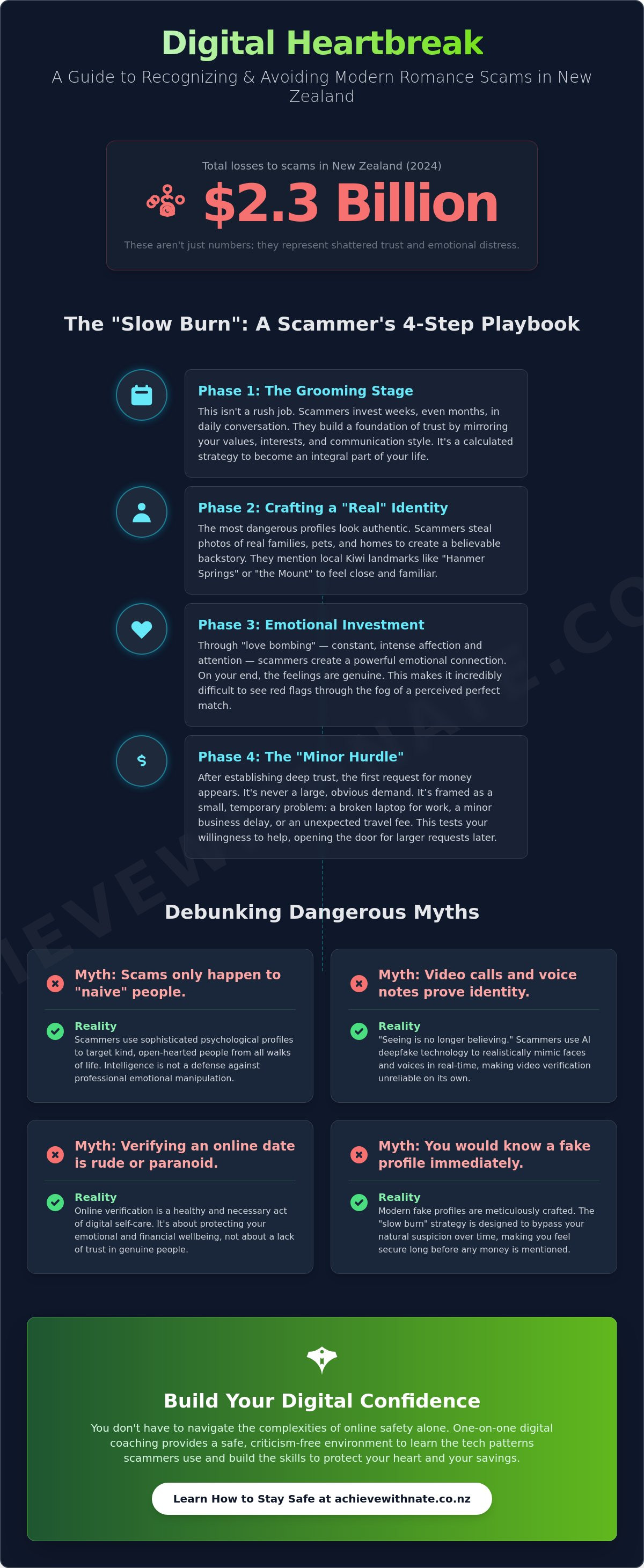
In 2024, total losses to scams in New Zealand surpassed a staggering $2.3 billion. It’s a heavy number that can make anyone feel a bit anxious about opening their heart online. You might feel a mix of hope and hesitation, or perhaps you worry about being judged for simply wanting to connect. Learning how to avoid romance scams nz isn’t about living in fear. It’s about building the quiet confidence to know which digital doors are safe to walk through and which ones are best left closed.
We understand that the digital world moves fast. New tools like AI deepfakes can make things feel even more confusing, but you don’t have to figure it out alone. This guide is a patient companion to help you recognize the red flags of modern scams without the technical jargon or pressure. We’ll explore how to spot sophisticated fake identities and protect your savings, all while keeping your independence intact. You deserve to feel safe while looking for connection. We’re here to help you find your footing one step at a time.
Key Takeaways
Understand that modern scams aren't about being "naive" but involve months of calculated emotional grooming to build trust.
Learn why "seeing is no longer believing" and how scammers use AI deepfakes to mimic faces and voices in real-time.
Reframe online verification as a healthy act of digital self-care rather than a sign of being paranoid or rude.
Discover a gentle 5-step checklist for how to avoid romance scams nz while keeping your heart and bank account secure.
Find out how one-on-one digital coaching can help you recognize the subtle tech patterns scammers use to manipulate their targets.
Table of Contents
Myth: Romance Scams Only Happen to "Naive" People
It is a common misconception that only "naive" or "lonely" people fall for online tricks. This belief is not only wrong; it is dangerous. In reality, professional scammers in 2026 use sophisticated psychological profiles and stolen data to target people from all walks of life. Whether you are a retired teacher or a busy professional, these criminals know how to mirror your values and interests. They aren't looking for "weak" people. They are looking for kind people who are open to connection. Understanding what romance scams are is the first step in protecting yourself. It is about recognizing that these are calculated emotional manipulations designed for financial gain. Learning how to avoid romance scams nz starts with removing the blame from the victim.
Many Kiwis feel a deep sense of embarrassment if they realize they have been targeted. This "shame factor" is exactly what scammers count on. It stops people from reporting the crime or asking for help. If you have been approached, please remember that intelligence and education do not protect you from professional emotional grooming. These criminals do this for a living; they are experts at building a false sense of security. To better understand how these situations unfold in our local community, watch this helpful video:
Why Kiwis are Specifically Targeted
Our "trusting Kiwi nature" is something to be proud of, but it is also something scammers exploit. We tend to take people at their word. This local friendliness, combined with our high usage of social media and dating apps, makes New Zealand an attractive target for organized crime. A romance scam is a professional criminal enterprise, not a personal failing. In 2024 alone, total losses to scams in Aotearoa surpassed $2.3 billion. This shows that the problem is widespread and affects thousands of our neighbors every year. You are not alone in this, and you certainly aren't the only one feeling a bit overwhelmed by the digital world.
The Emotional Cost Beyond the Bank Account
The damage of a scam isn't just about the numbers on a screen. It is about the heartbreak and the sudden loss of digital confidence. It can feel like the world is no longer a safe place to explore. We believe that recovery starts with self-compassion, not criticism. You shouldn't have to hide or feel judged for wanting a connection. At the Achieve With Nate Movement, we take a person-centered approach to technology. We focus on creating a safe, criticism-free environment for every learner. Building your digital strength is a journey we take together, one manageable step at a time.
Myth: You Would Know Immediately if a Profile Was Fake
It is a common thought. "I would know a fake profile if I saw one." We often imagine pixelated photos, strange robotic messages, or obvious spelling mistakes. In reality, the most dangerous profiles look exactly like your neighbor, an old school friend, or a charming professional. Learning how to avoid romance scams nz means accepting that these actors are incredibly patient. They don't want your money on day one. They want your trust first. They are willing to wait months to get it.
Scammers often enter what is known as the "Grooming Phase." This period can last for weeks or even months of daily conversation. They share meticulous backstories to make themselves feel real. You might see photos of "their" children at a local park or a "family dog" sleeping by a fireplace. These images are usually stolen from the social media accounts of real families, which makes the profile feel lived-in and honest. Your gut feeling can be easily manipulated when someone gives you constant, positive attention. It feels like a real connection because, on your end, the emotions are genuine.
The "Slow Burn" Strategy
Modern scammers use a "slow burn" strategy to bypass your natural suspicion. Instead of grand, unbelievable gestures, they focus on shared interests and local rapport. They might mention they grew up near the Mount or love weekend trips to Hanmer Springs. This local detail makes them feel "close to home" and safe. Eventually, the intense affection, or love bombing, shifts slightly. You will hear about a "minor hurdle." They won't ask for a large bank transfer immediately. They might just mention a frustrating issue with a broken laptop or a temporary business delay. This is a soft ask. It is a test to see how helpful you are before the real financial manipulation begins.
Common 2026 Personas to Watch For
The personas used by scammers are constantly evolving. In 2026, the lonely soldier or the stranded oil rig worker has been replaced by more modern identities. Watch for "AI entrepreneurs" or "remote specialist doctors." These roles provide a perfect excuse for why they cannot meet in person yet, while still sounding successful and stable. They often post photos with recognizable New Zealand landmarks to cement the lie. If you want to feel more confident navigating these social spaces, our Device and Email Basics Training is a gentle place to start. It helps you understand the basics of profile security without any added stress. Taking a small, manageable step to educate yourself is a wonderful way to keep your heart and your bank account safe. If you are ever feeling unsure about a new online connection, a quick chat with a supportive coach can help you look at the situation through a calm and objective lens.
Myth: Video Calls and Voice Notes Prove Identity in 2026
It feels like a massive weight has been lifted when you finally see the face of someone you have been messaging for weeks. A video call feels like the ultimate safety net. It is a moment where you think, "Okay, they are real." You hear their voice, you see them smile, and you feel that genuine spark of connection. Unfortunately, the digital world has changed quite a bit lately. Knowing how to avoid romance scams nz in this new landscape requires a gentle update to our digital habits. In 2026, seeing is no longer believing on a smartphone screen. Technology has reached a point where we can't always trust our eyes and ears without a few extra checks.
The Rise of Deepfake Romance Scams
Scammers are now using artificial intelligence to create "deepfakes." These are digital masks that can mimic a specific person's face and voice in real-time during a call. They can even clone a person's voice from just a few seconds of audio found on social media. If the person you are chatting with always has a "bad connection" or the video seems a bit grainy and laggy, they might be using these tools. These glitches often happen because the software is struggling to keep the digital mask perfectly in place. In 2026, a video call is no longer 100% proof of identity. It is a tough reality to accept, but being aware of it is your best defense. One simple way to check is to ask the person to perform a random action. Ask them to hold up a specific object, like a teaspoon or a local library card. A digital mask often can't handle these sudden, unscripted movements, and the image will "break" or look strange for a moment.
Verification Techniques That Still Work
While technology can be used to trick us, we can also use it as a supportive tool for our own peace of mind. One of the most effective skills we teach is the "Reverse Image Search." This allows you to take a photo they have sent and see if it appears anywhere else on the internet. If that "retired general" is actually using a photo from a stock photography website, you will find out immediately. It is a quick, low-stress way to verify the person behind the screen. You can also use your local knowledge to cross-reference their stories. If they say they are living in a specific part of Christchurch or Tauranga, ask them about a local landmark or a small shop that wouldn't be famous online. Their reaction will often tell you everything you need to know.
It might feel a bit uncomfortable at first to "test" someone you care about. However, think of it as a form of digital self-care. You are protecting your heart and your future. Interestingly, learning AI tools yourself can actually help you spot when they are being used against you. When you understand how these digital masks are made, they become much easier to see through. We find that once our learners understand the "how," the anxiety starts to fade. You begin to feel more in control of your online world. Taking these incremental, manageable actions is how you build the confidence to explore new connections safely.
Myth: Verifying Your Online Date is "Rude" or "Paranoid"
It can feel a bit sneaky or even unkind to look up someone you are starting to like. You might worry that checking their details is rude or shows a lack of trust. We want to gently reframe this for you. Verifying an online connection isn't "spying." It is a vital form of digital self-care. Just as you would check the locks on your front door at night, you are simply ensuring your digital home and your heart are secure. Anyone who is genuine and truly cares about you will respect your need for safety and boundaries. In fact, a real person will often be happy to help you feel more comfortable because they value your well-being as much as you do. Learning how to avoid romance scams nz isn't about being paranoid; it's about being prepared and empowered.
A Step-by-Step Safety Check
Taking things slow is the best way to build a healthy relationship. If you aren't sure where to start, here is a gentle 5-step checklist to help you verify a new online connection:
Step 1: Use a reverse image search on their profile pictures to see if they appear under a different name elsewhere on the internet.
Step 2: Search their full name alongside words like "scam", "fraud", or "fake" on Google to see if others have reported similar stories.
Step 3: Look for a history of real, consistent interactions with family or local friends on their social media pages.
Step 4: Propose a meeting in a public NZ place, like a busy cafe or a local library, where you feel safe and comfortable.
Step 5: If they claim to be working away, ask for a very specific live photo, such as them holding a current copy of a local New Zealand newspaper.
Involving Your "Safety Circle"
When we are excited about a new connection, our brains often skip over the small warning signs. This is a completely natural part of being human. It is why we always recommend involving a "safety circle" of trusted friends or family members. Sometimes, a second pair of eyes can spot a pattern or a strange detail that you might have missed in the glow of a new conversation. A digital coach can also act as a supportive, non-judgmental partner in this process. We can help you perform these checks in a calm, pressure-free environment, ensuring you feel seen and understood rather than patronized. For more practical advice on staying safe in Aotearoa, you might find our guide on Digital Confidence for NZ Seniors helpful. It is designed to help you stay connected without the anxiety of the unknown.
If you would like a patient companion to help you navigate these steps at your own pace, please consider filling out our expression of interest form for a private, one-on-one consultation. Taking this small, manageable action can give you the peace of mind you deserve.
How Digital Coaching Protects You from Scams
Digital confidence is about more than just knowing which buttons to press on your phone. It is really about developing a sense of critical thinking that acts as your inner compass. Scammers rely on speed, pressure, and the hope that you might feel too overwhelmed to ask questions. When you work with a patient mentor, you learn to slow down. You begin to see the "tech patterns" that professionals use to manipulate people. It is about moving from a place of uncertainty to a place of quiet strength. Learning how to avoid romance scams nz becomes much easier when you have someone walking beside you.
We believe that mastery comes through small, manageable actions. Scammers love the "fear factor" of new technology. They want you to think the digital world is too complex for you to understand. By taking incremental steps toward mastery, you take that power away from them. You aren't just learning an app; you are building a shield of knowledge. This process doesn't have to be stressful or boring. Our coaching is a gentle way to learn how to avoid romance scams nz while keeping your digital life simple and safe.
Building Your Digital Armor with Nate
Having a patient teacher makes all the difference when it comes to your online safety. Nate acts as a non-judgmental partner, sitting down with you to walk through security settings at a pace that feels right. One of the best ways to protect your identity in Aotearoa is through a secure login. We can help you with RealMe account setup to ensure your personal information stays exactly where it belongs in 2026. This isn't about high-tech authority; it's about neighborly kindness and making sure you feel seen. If you are ready to audit your online safety, you can book a digital confidence session with us today.
Reclaiming Your Peace of Mind
Technology should be a wonderful tool for connection, not a constant source of stress. It should help you stay in touch with family in London or find new friends in Auckland without the worry of being tricked. Our goal is to help you maintain your digital independence so you can explore the internet with a smile. If things ever do go wrong, it is vital to know there are fallback resources available. We have a guide on reporting a cybercrime in NZ that can help you find your footing again. Remember, recovery starts with self-compassion. You have the right to feel safe, and we are here to help you find that peace of mind.
Take Control of Your Online Journey
Exploring the digital world should be an exciting experience, not a source of constant worry. We have seen that modern scammers use sophisticated tools like AI masks, but you have the power to see through their tactics. By understanding that verification is a healthy boundary and that "seeing" isn't always "believing" in 2026, you are already better protected. Learning how to avoid romance scams nz is a journey of small, manageable steps that lead to lasting independence and safety.
You don't have to navigate these rapid technological changes alone. We provide personalized, patient 1-on-1 support designed specifically for Kiwis in a way that feels like a chat with a helpful neighbor. Our NZ-based expertise ensures you are learning in a warm, no-judgment environment where your well-being always comes first. It's time to replace digital anxiety with the quiet strength of knowing exactly what to look for. You deserve to feel safe while connecting with others in Aotearoa.
Every small action you take today builds a safer tomorrow for your heart and your bank account.
Frequently Asked Questions
What is the first thing I should do if I think I’m being scammed?
You should stop all contact immediately and secure your bank accounts. Don't feel embarrassed; these are professional criminals who target many kind people in Aotearoa. Reach out to your bank and report the situation to Netsafe right away. They are there to help you navigate the next steps without any judgment. Taking this quick action is the best way to protect what is yours and start reclaiming your peace of mind.
Can a scammer use my face or voice to trick my family?
Yes, scammers can use small clips of your voice from social media to trick your loved ones. This is often called a "family emergency scam." They might call a relative pretending to be you in trouble and asking for urgent money. It is a good idea to have a secret "family password" that only your real inner circle knows. This simple, non-digital check can verify your identity and keep your family safe from AI tricks.
Is it safe to use dating apps in New Zealand in 2026?
Dating apps are safe to use as long as you have the right digital tools and confidence. Learning how to avoid romance scams nz means you can enjoy meeting new people without the constant stress of the unknown. It is all about taking your time and verifying who you are talking to before sharing personal details. We find that moving slowly and staying in control is the best way to find a genuine connection.
What are the red flag words romance scammers often use?
Watch for words that create a sense of "urgency" or "secrecy." Scammers often say things like "I'm the only one you can trust" or "Keep our love a secret." They might also mention "crypto," "investments," or "business hurdles" quite early in the conversation. These are clear signs to step back and breathe. A real person who cares about you will never pressure you to hide your relationship or send money.
How much does it cost to have a digital coach help me with security?
The cost of digital coaching depends on your individual needs and the amount of support you feel most comfortable with. We focus on providing personalized, one-on-one sessions that move at your own pace. Because your digital journey is unique, we prefer to have a gentle conversation first. This helps us understand how we can best help you build your confidence and master your devices in a way that feels stress-free.
What should I do if I have already sent money to an online partner?
You must contact your bank immediately and stop all further payments. Do not send more money to "unlock" previous funds, as this is a common trick used by organized criminals. Learning how to avoid romance scams nz also involves reporting the loss to the New Zealand Police and Netsafe. They can provide the right guidance to help you protect your remaining assets and find a safe way forward.
Are romance scams common on Facebook and Instagram?
Romance scams are very common on social media platforms like Facebook and Instagram. Scammers often look at your public photos and posts to find shared interests and build a false sense of rapport. They use this information to make their fake profiles seem like a perfect match for you. It is always wise to keep your profile settings private. This small step ensures you are only sharing your life with people you truly know.
How can I tell if a video call is a deepfake?
Look for strange glitches, like the person's face "blurring" when they move quickly or touch their cheek. You can also ask them to hold up a specific household object, like a teaspoon or a local library card. AI masks often struggle with these sudden, unscripted movements. If the video looks grainy or the sound doesn't match their lip movements, it is a sign that the person might not be who they say they are.

Comments